
14 years since my strokes

Today marks the 14th anniversary of the day my world went silent.

I was already in a hospital bed, recovering from a first stroke, when the "massive one" struck. In an instant, the right side of my body surrendered to paralysis. I remember the desperation of trying to reach the call button—a simple plastic switch that might as well have been on the moon for all my arm could move. I lay there in the quiet for an hour before a nurse finally walked in.

Later, through a fog of shock, I heard Heather’s voice. She told me the truth: it was a "really bad" stroke. I couldn't speak to ask questions; I could only cry. 


When she told me my parents and my oldest brother, Dan, were on their way, the fear deepened. My mind raced—Dan was supposed to be in Hawaii; my parents were hours away in Twin Falls. If they were all suddenly standing in my hospital room, there was only one logical conclusion: they were coming to say goodbye.


I remember my two middle brothers leaning in to hug me, followed by my parents and Dan. As their arms wrapped around me, I kept crying, convinced I was looking at them for the last time.


But, as Mark Twain famously quipped, "The reports of my death are greatly exaggerated."


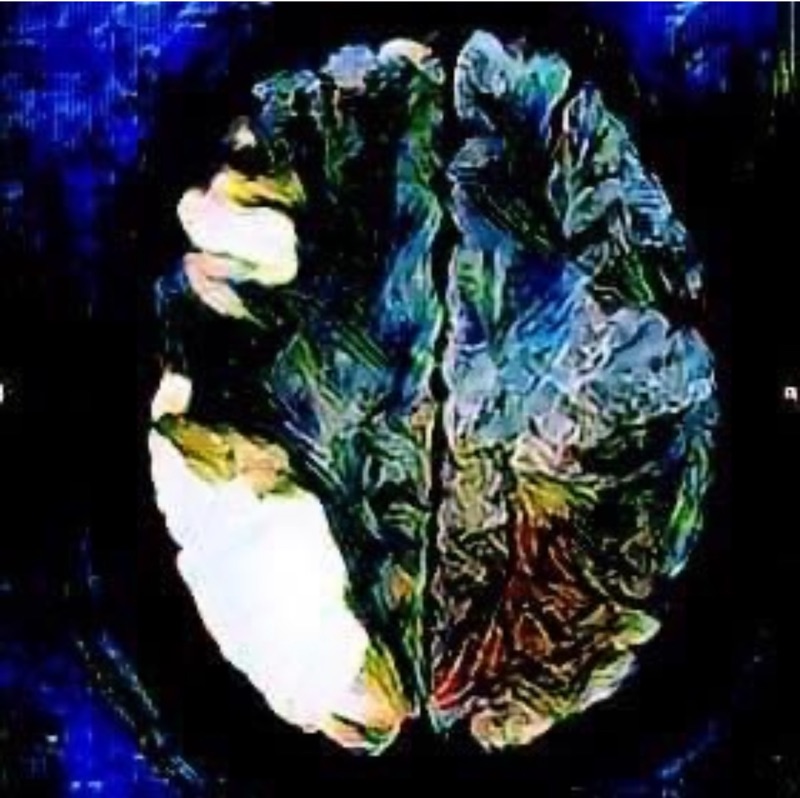
The stroke claimed 20% of my brain, leaving a permanent silence where there used to be a connection. But it didn't claim my life. Through the grueling years of therapy that followed, I learned what it meant to fight for every inch of progress. 


Today, I look back with profound gratitude for Heather, my brothers, and the friends who stayed by my side when I couldn't even find the words to ask them 


Fourteen years later, I will never take my life for granted.


Comments

Popular posts from this blog

The Two Faces of the American Dream

The massive wave of Norwegian immigration to Minnesota from the 1850s through the early 20th century wasn't a casual choice; it was an escape from crushing land scarcity and economic desperation.  My ancestors, the Dunhams, arrived in 1851 and built a life in Otter Tail County in Minnesota. My great-great-grandfather, Jens Christian Dunham, didn’t just survive—he thrived. He served in the Minnesota legislature as a Republican from 1888 to 1890 and later became a staunch advocate for President Teddy Roosevelt. He was the literal embodiment of the American Dream: an immigrant who fled poverty to become a lawmaker in his new home. Fast forward a century, and a new wave of immigrants—this time from Somalia—is following that exact same blueprint. Like the Norwegians before them, they fled hardship to build a future in Minnesota, and many have run for office to serve the state that welcomed them. Yet, the political rhetoric surrounding these two groups couldn't be more polarized. Don...

Phantom Blindness and Taking a Break after Strokes

I met with my eye doctor last week about taking some time off from my vision therapy. I have been doing therapy since my stroke almost two and a half years ago. I am tired, and a need a break. My doctor said, “This is completely understandable. Take some time off.” At the appointment, my doctor tested my vision. Because of the strokes, my vision was affected, and I have a problem in my field of vision on the right side. I have a deficit with my right side peripheral vision. However, it is getting better. During the test, I told him that I “sense things on the right side of my peripheral vision.” It seems that I know that something is there, but I cannot really distinguish what it is. He told me that there is a body of thought describing phantom vision or phantom blindness. A Polish researcher, L. Bieganowski, described this phantom blindness this way:    “The subject of the paper is the phenomenon of phantom vision. It occurs among the blind (or almost blind...

Eye floaters, Strokes, Another ER visit….

It is always something.... I’ve had eye floaters for as long as I can remember. My paternal grandmother had them. My brothers have them too. They’ve always been part of my vision—little drifting specks, threads, and shadows moving across my sight. Over time, you learn to live with them. Sometimes they swirl around, sometimes they settle toward the bottom of your vision, and most of the time you simply ignore them. Floaters are actually tiny clumps inside the eye that cast shadows on the retina. They’re common as we age, especially after fifty, and usually they’re harmless. Doctors will tell you that most people eventually tune them out. But sometimes they change. On Wednesday, while we were driving home from an overnight trip, something felt different. It was my left eye. The floaters suddenly looked darker, heavier, and there were flashes of light along the edge of my vision—almost like a bright crescent moon flickering on and off. At first, I tried to ignore it. After everything ...