
Smallpox and stupidity

The Price of Ignorance: A Lesson from 1883

In a quiet Minnesota cemetery, there is a weathered, joint headstone for Ida Mathilde and Fritjof Bernard Dunham. They were my ancestors, and they died four days apart in 1883. For years, the inscription was a blur of degraded stone—a literal erasure of two lives.


I’ve always been intrigued about those young ancestors of mine. Recently I scoured cemeteries in Otter Tail County in Minnesota. I called several cemeteries especially ones designated for Norway.


Luckily, a very nice woman researched the graves for me. She also detailed the cause of their deaths. 


The mystery is solved in a heartbreaking way. It was a death sentence called smallpox.


In 1883, my great-grandfather watched his siblings die because science hadn't caught up to the cruelty of the natural world. They didn’t have a choice. They didn't have a "personal philosophy" or a "suspicion of big medicine." They just had tiny coffins and a lifetime of grief.


Today, smallpox is gone. We didn't pray it away, and we didn't "boost our immune systems" with essential oils. We eradicated it with vaccinations.


The fact that we live in an era where people actually choose to invite these monsters back into our schools and homes is a special kind of arrogance. My ancestors buried their children because they had no defense. 
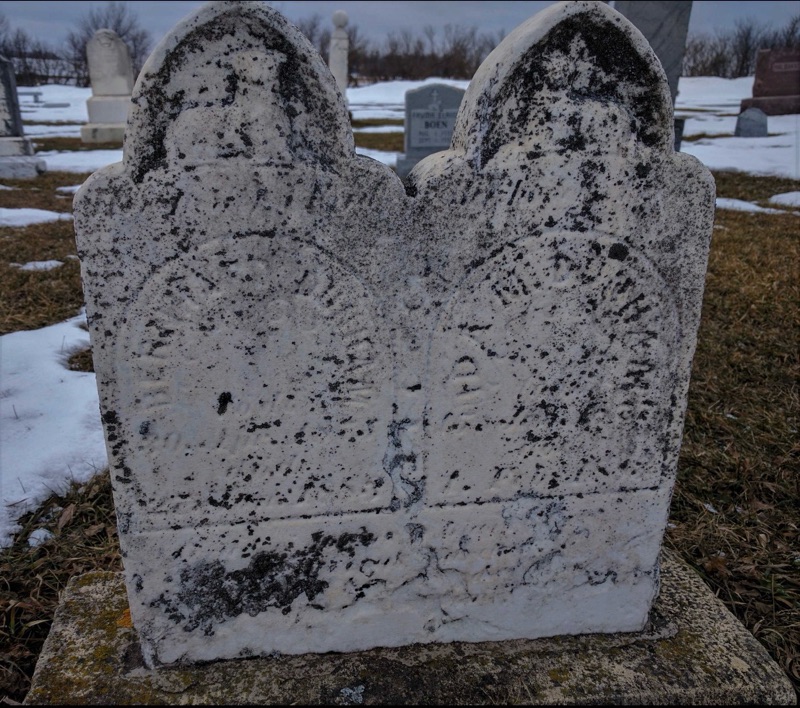

Modern anti-vaxxers risk burying theirs because they’re too intellectually lazy to respect the history written on those headstones. There is no excuse for dead children in the 21st century—unless you’re just fucking stupid.


Comments

Popular posts from this blog

The Two Faces of the American Dream

The massive wave of Norwegian immigration to Minnesota from the 1850s through the early 20th century wasn't a casual choice; it was an escape from crushing land scarcity and economic desperation.  My ancestors, the Dunhams, arrived in 1851 and built a life in Otter Tail County in Minnesota. My great-great-grandfather, Jens Christian Dunham, didn’t just survive—he thrived. He served in the Minnesota legislature as a Republican from 1888 to 1890 and later became a staunch advocate for President Teddy Roosevelt. He was the literal embodiment of the American Dream: an immigrant who fled poverty to become a lawmaker in his new home. Fast forward a century, and a new wave of immigrants—this time from Somalia—is following that exact same blueprint. Like the Norwegians before them, they fled hardship to build a future in Minnesota, and many have run for office to serve the state that welcomed them. Yet, the political rhetoric surrounding these two groups couldn't be more polarized. Don...

Phantom Blindness and Taking a Break after Strokes

I met with my eye doctor last week about taking some time off from my vision therapy. I have been doing therapy since my stroke almost two and a half years ago. I am tired, and a need a break. My doctor said, “This is completely understandable. Take some time off.” At the appointment, my doctor tested my vision. Because of the strokes, my vision was affected, and I have a problem in my field of vision on the right side. I have a deficit with my right side peripheral vision. However, it is getting better. During the test, I told him that I “sense things on the right side of my peripheral vision.” It seems that I know that something is there, but I cannot really distinguish what it is. He told me that there is a body of thought describing phantom vision or phantom blindness. A Polish researcher, L. Bieganowski, described this phantom blindness this way:    “The subject of the paper is the phenomenon of phantom vision. It occurs among the blind (or almost blind...

Greek orthodox and Catholic‘s

Being a history buff, I’ve always understood that the Catholic Church was split in about 1000 A.D. Our Greek tour guide mentioned the differences a little bit yesterday, but she did not capture the full history. Today I saw a small Greek orthodox by the roadside and I’m going to insert about the history. Eastern Orthodox Catholics and Roman Catholics are the result of what is known as the East-West Schism (or Great Schism) of 1054, when medieval Christianity split into two branches. The Byzantine split with Roman Catholicism came about when Pope Leo III crowned Charlemagne, King of the Franks, as Holy Roman Emperor in 800. From the Byzantine viewpoint, this was a slap to the Eastern Emperor and the Byzantine Empire itself — an empire that had withstood barbarian invasions and upheld the faith for centuries. After Rome fell in 476, Byzantium was the only vestige of the Holy Roman Empire. Charlemagne’s crowning made the Byzantine Emperor redundant, and relations between the East and...